Yellow Rose Lace Font
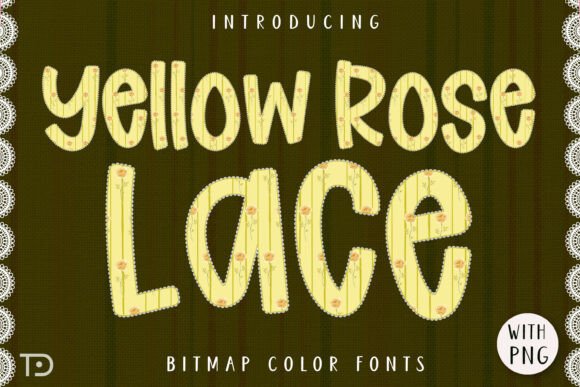
There’s something undeniably charming about the way Yellow Rose Lace Font sits on a page. It’s soft, elegant, and just a little bit whimsical—perfect for adding a touch of Shabby Chic to any project. I first discovered it while designing labels for my handmade soy candles, and I knew right away it would be a staple in my creative toolkit.
The font has a delicate lace-like texture that feels handcrafted, almost like it was etched by an artisan with a fine pen. Its curves are gentle, its strokes are light, and it carries a warm, nostalgic vibe that works well with rustic, vintage, or feminine themes. Whether I’m printing a label, creating a sticker, or designing a card, Yellow Rose Lace adds a refined yet approachable look that elevates the overall aesthetic.
Using Yellow Rose Lace in Handmade Projects
I often use Yellow Rose Lace for candle labels. The font pairs beautifully with simple, clean backgrounds, making the text stand out without overwhelming the design. It also works well on greeting cards, especially for birthdays, weddings, or seasonal messages. The font’s subtle details make it feel personal, like it was written just for the recipient.
For wedding invitations, I’ve used Yellow Rose Lace as a secondary font alongside a bold serif. It gives the design a layered, sophisticated feel without being too ornate. On farmhouse signs, it adds a touch of charm that complements wooden textures and pastel color schemes. I’ve even used it on printable wall art for home decor, where its softness balances bolder elements like patterns or illustrations.
When working with digital printables, I find that Yellow Rose Lace is ideal for headers, titles, and decorative wording. It’s not meant for long paragraphs, but it shines when used for short phrases, names, or logos. I always test it at different sizes to ensure it remains legible, especially when cutting with Cricut or Silhouette machines.
Practical Tips for Using Yellow Rose Lace
One thing I’ve learned is that Yellow Rose Lace works best on larger text. For product labels or small stickers, I sometimes pair it with a simpler font to maintain clarity. A clean sans serif or a basic script can help balance its intricacy without losing the unique character of the design.
When preparing mockups, I like to experiment with different color combinations. Soft pastels, muted tones, and neutral shades bring out the font’s elegance. I also recommend testing it on various materials—like paper, fabric, or vinyl—to see how it translates in real-world applications.
If you’re using Yellow Rose Lace for commercial purposes, make sure to check the licensing terms. Some fonts have restrictions on resale or modification, so it’s important to confirm what you’re allowed to do with the file. I’ve found that the font includes multiple styles and alternates, which is helpful for customizing designs and avoiding repetition.
Designing with Yellow Rose Lace
For boutique packaging, I love using Yellow Rose Lace on tags and ribbons. It adds a sense of luxury without being too formal. When creating printable templates, I often use it for headers or decorative elements, letting it stand out against more straightforward text.
On mugs and tote bags, the font looks great when printed in a single color, especially if the background is simple. I’ve used it for seasonal items like holiday tags and Easter eggs, where its softness complements the theme. It also works well for planner pages, where it can highlight dates, quotes, or key notes.
When designing for social media or website banners, I sometimes pair Yellow Rose Lace with a modern sans serif to create contrast. This combination keeps the design fresh while still maintaining a cohesive style. I also use it for logo concepts, where its uniqueness helps set a brand apart.
Final Thoughts on Yellow Rose Lace
Yellow Rose Lace isn’t just a font—it’s a design element that brings personality and charm to every project. Whether I’m making labels, cards, or digital downloads, it consistently delivers a look that feels thoughtful and intentional. Its versatility makes it a valuable addition to any creative arsenal, especially for those who value style, quality, and attention to detail.
As I continue to explore new ways to use it, I’m always impressed by how it adapts to different mediums and purposes. From candle labels to wedding stationery, it never fails to add that extra touch of elegance that makes a handmade item feel truly special.